Last Updated: October 25, 2026
Quick Summary
To buy sewing supplies online safely, verify the seller is legitimately registered with ASIC, check their contact details and business history, read customer reviews across multiple platforms, and inspect product descriptions for precise fibre content, measurements, and care instructions. Use secure payment gateways with HTTPS encryption and credit cards for fraud protection, and always review the retailer’s return policy before purchasing.
- Search the seller’s business name on the ASIC register and confirm their ABN matches their website.
- Look for detailed product descriptions including exact fibre percentages, width, length, weight in grams per square metre, and care instructions.
- Check for the padlock icon and HTTPS in the website URL before entering payment details.
- Read customer reviews across multiple platforms like eBay, Google Reviews, and Trustpilot to identify patterns.
- Understand the return window and conditions before buying, and document any damage or misrepresentation with photos immediately.
Table of Contents
- Verify the seller before you buy sewing supplies online safely
- Online fabric shopping tips for quality and authenticity
- Fabric descriptions and measurements you should expect
- Online shop payment security essentials
- Fabric returns and shipping policies explained
- What to do if your order arrives damaged or misrepresented
- Frequently Asked Questions
Verify the seller before you buy sewing supplies online safely
When you buy sewing supplies online safely, the seller matters as much as the product itself. A trustworthy retailer protects your purchase and your payment information.
The first step is simple: verify the business exists and operates legitimately. Look for physical contact details, not just an email address.
Check business registration and contact details
Search for the business name on the ASIC register. This tells you whether the company is legitimately registered and current. ASIC business registers
Look for multiple contact methods: email, phone, and a physical address. Boutique suppliers often include postal addresses because they handle physical inventory.
Check how long the business has been trading. ASIC records show registration dates. Retailers with 10+ years of operation have survived market pressures and customer scrutiny.
Read customer reviews on multiple platforms
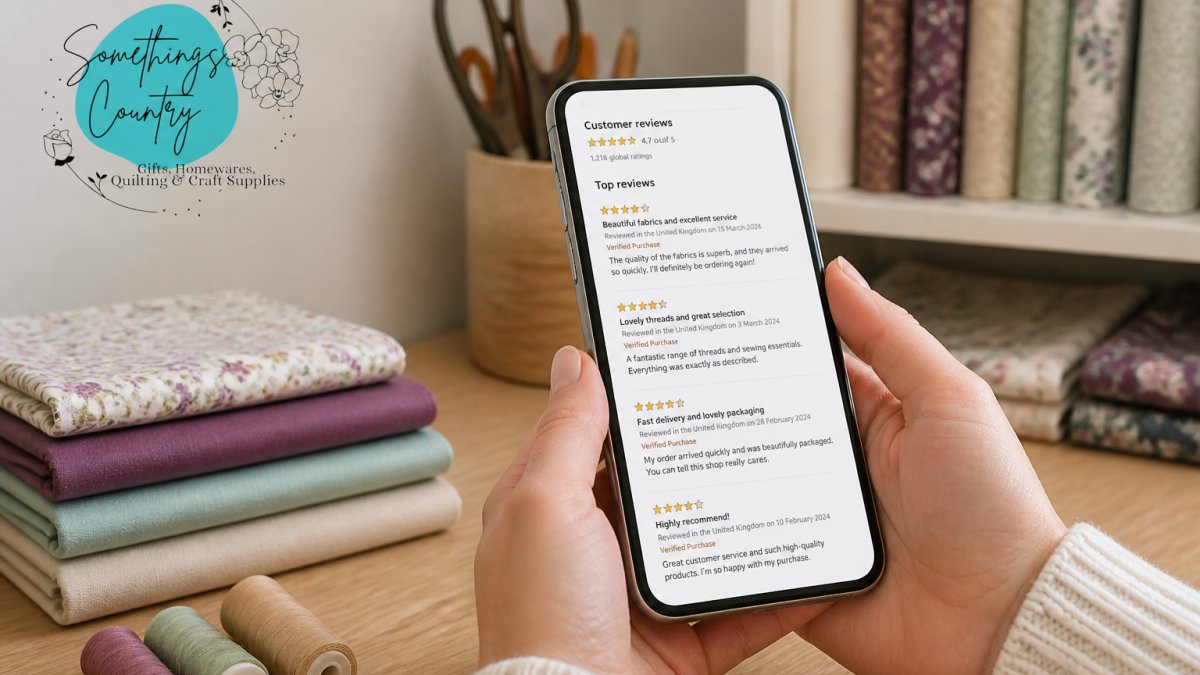
Don’t rely on reviews from a single source. Check eBay, Google Reviews, Trustpilot, and the retailer’s own website. Patterns emerge when you read across platforms.
Pay attention to how the seller responds to criticism. Professional retailers reply to complaints, offer solutions, and demonstrate they care about customer satisfaction.
Look for reviews mentioning specific details: “Fabric arrived exactly as described,” “Bobbins fit my Janome perfectly,” “Wrapping was exceptional.” Detailed praise is more credible than generic five-star ratings.
Online fabric shopping tips for quality and authenticity
Counterfeit fabric and accessories circulate online. Authentic boutique suppliers describe products with precision. View an example of a sewing accessory product with detailed specifications to see the quality standards you should verify when buying online.
Request close-up photos if the website images look low-quality or unclear. Legitimate sellers provide detailed product shots from multiple angles. Blurry photos or generic stock images suggest the seller hasn’t inspected the product themselves.
Assess product descriptions and photos
High-quality fabric suppliers specify exactly what you’re getting.
Photos matter enormously. Look for images showing the fabric’s texture, weave, and colour under natural light. Boutique suppliers often include photos of the fabric in use, sewn into garments, quilted, or displayed alongside a ruler for scale.
Check whether the seller offers samples. Some boutique fabric shops send small swatches before you commit to a full metre. This costs them money but demonstrates confidence in their product quality.
Spot counterfeit or misrepresented supplies
Counterfeit sewing machine accessories are common online.
If you own a Janome, Brother, or Bernina machine, buy accessories from retailers who stock genuine parts. Counterfeit bobbins may fit loosely, causing tension problems and broken stitches.
Fabric misrepresentation is another risk. A seller might describe polyester as cotton or list incorrect dimensions. Before purchasing, compare the product description against the manufacturer’s specifications if available.
Fabric descriptions and measurements you should expect
When you buy sewing supplies online safely, accurate measurements are non-negotiable. Quilting fabric typically comes in widths of approximately 114 centimetres or 152 centimetres. Linen and specialty fabrics vary. The seller should specify width, length, and weight in their description.
A proper description reads: “100% cotton quilting fabric, 114 centimetres wide, 1 metre length, approximately 150 grams per metre, Liberty print design.” Not: “Nice fabric, 1 metre.”
Fibre content and care instructions
Fibre content determines how the fabric behaves. Cotton shrinks. Polyester doesn’t. Linen wrinkles. Blends behave differently depending on the ratio.
Care instructions should accompany fabric. Washing temperature, drying method, and whether the fabric requires pre-washing are essential details. Some fabrics bleed dye or shrink significantly.
Sewing kits with cloth like the Quilting Patchwork Sewing Sashiko Starter Kit Templates And Cloth demonstrate how quality suppliers present fibre content, care requirements, and detailed specifications.
Width, length, and weight specifications
Measurements must be precise. “1 metre” isn’t enough, specify width. “114 centimetres wide” isn’t enough, specify length. Weight per square metre tells you fabric density and drape.
Products like the Sew Easy Cross X Stitch Aida Cloth 14 Count White 36x45cm Fabric show the standard: exact dimensions (36 centimetres by 45 centimetres), count specification (14 count), colour (white), and fibre content.
When a seller lists dimensions vaguely or omits weight, ask before buying. A legitimate retailer answers quickly and precisely. A reluctant or vague response suggests they haven’t measured the stock carefully.
Quality boutique suppliers provide detailed specifications that help you make informed purchasing decisions.
| Specification | What to expect | Why it matters |
|---|---|---|
| Fibre content | Exact percentages, e.g. 100% cotton or 65% polyester, 35% cotton | Determines how fabric behaves, shrinks, and wears |
| Width | Precise measurement, e.g. 114 centimetres or 152 centimetres | Essential for calculating yardage and project planning |
| Length | Exact amount, e.g. 1 metre | Prevents ordering incorrect quantities |
| Weight | Grams per square metre, e.g. 150 gsm | Indicates fabric density and drape characteristics |
| Care instructions | Washing temperature, drying method, pre-washing requirements | Prevents damage and colour bleeding in finished projects |
| Thread count | Specified for quilting fabrics | Affects fabric quality and suitability for projects |
Online shop payment security essentials
Your payment method is your protection. Secure payment gateways encrypt your information so hackers can’t intercept it. When you buy sewing supplies online safely, you’re looking for HTTPS in the website URL (the “S” means secure) and a padlock icon in your browser’s address bar.
Shop Here To Find Our Products →
Credit card payments offer stronger fraud protection than direct bank transfers or cryptocurrency. If a retailer demands payment via bank transfer only, that’s suspicious. They’re asking you to send money with no recourse if the product doesn’t arrive or is misrepresented.
Secure payment gateways and SSL certificates
SSL certificates are the standard security protocol for online shopping. They encrypt data between your browser and the website’s server.
Reputable payment processors include PayPal, Stripe, Square, and bank-based solutions. These companies handle thousands of transactions daily and maintain rigorous security standards.
Avoid retailers who ask you to email payment details or use unusual payment methods. Legitimate businesses use established payment platforms that include fraud detection and chargeback protection.
Credit card protection and fraud safeguards
Australian credit card holders are protected under the ePayments Code, administered by the Australian Securities and Investments Commission (ASIC). ASIC ePayments Code
Debit cards offer less protection than credit cards. If someone uses your debit card fraudulently, you’re fighting to recover money that’s already left your account.
When you buy sewing supplies online safely, use a credit card from a major issuer. Keep records of your transaction confirmation, order number, and payment date.
Fabric returns and shipping policies explained
Before you buy sewing supplies online safely, read the returns policy. A 30-day return window is standard. Some retailers offer longer periods. Understand the conditions: do they accept returns on fabric that’s been cut?
Somethings Country offers a 30-day return guarantee, which gives you reasonable time to inspect purchases and confirm they match the description. Clear return policies protect both buyer and seller by setting expectations upfront.
Return windows and restocking conditions
A legitimate return policy specifies: the window (e.g., 30 days from purchase), the condition required (unused, original packaging), and the process (email to request, print a label, ship back).
Faulty items, fabric with printing defects, thread that’s damaged, bobbins that don’t fit, should be returnable without question. A seller who resists returns for genuinely defective products is problematic.
Ask whether the retailer covers return shipping for faulty items. Many do. Some require you to pay for return postage, which is less customer-friendly but not uncommon.
Shipping timeframes and damage protection
Shipping timeframes vary. Local delivery typically takes 3-7 business days. Interstate shipping takes 5-10 days. Overseas shipping takes 2-4 weeks.
Damage protection is critical. Fabric arriving crushed or creased is frustrating. Thread arriving with the spool cracked wastes money. Reputable retailers package carefully to prevent damage.
Check whether the retailer insures shipments. If your package is lost or severely damaged, insurance ensures you’re compensated. Ask about this before buying high-value items.
What to do if your order arrives damaged or misrepresented
Problems happen despite precautions. A package gets dropped. A fabric’s colour doesn’t match the website. Bobbins arrive with the wrong specifications. When this occurs, you need to act quickly and document everything.
Document the issue with photos and descriptions
Take photos immediately when you open the package. Capture the damage from multiple angles. If fabric arrived creased or stained, photograph it clearly.
Write a detailed description of the problem. Don’t just say “wrong item”, explain specifically what’s wrong.
Keep all packaging and documentation. The original box, invoice, and product packaging are evidence. They show the item arrived in the seller’s packaging and help establish the timeline.
Contact the seller and understand your rights
Email the seller within 24-48 hours of discovering the problem. Include photos, your order number, and a clear description.
If the seller doesn’t respond or refuses to help, escalate. Contact the payment processor (PayPal, your credit card company) and file a dispute. Provide your documentation, photos, emails, order confirmation.
You also have rights under the Australian Consumer Law. ACCC consumer rights for online shopping
Buying boutique sewing supplies online safely requires vigilance, but it’s entirely achievable when you know what to check. These are the hallmarks of a retailer you can trust. Shop here to find our products and experience the difference that genuine boutique service makes.
Frequently Asked Questions
How can I tell whether an online sewing shop is trustworthy?
Look for clear contact details, a physical address, and transparent business information on their website. Check customer reviews across multiple platforms, not just their own site. Reputable shops display security badges, offer secure payment options, and have established return policies. Read what customers say about packaging quality and delivery reliability. Shops with years of trading history and consistent positive feedback are typically safer choices than new retailers with no reviews.
What should I check before buying fabric online?
Verify fibre content, width, and length specifications in the product listing. Check whether colours are accurately represented, request samples if the seller offers them. Read the care instructions and any weight or texture details provided. Look at multiple product photos from different angles. Review the seller’s return policy in case the fabric doesn’t match your expectations or arrives damaged. Compare descriptions across reputable retailers to spot inconsistencies that might indicate misrepresented stock.
Is it safe to pay for sewing supplies with a credit card online?
Yes, if you use secure payment methods on trusted websites. Look for ‘https://’ in the URL and a padlock icon, which indicate an encrypted connection. Major retailers use SSL certificates to protect your information. Credit cards offer strong fraud protection; if unauthorised charges appear, your bank can dispute them. Use reputable payment gateways rather than wire transfers or unusual methods. Never store your full card details on a retailer’s site unless you trust them completely. Check your statements regularly for suspicious activity.
What should I do if my sewing supplies arrive damaged or not as described?
Photograph the damage or discrepancy immediately and keep the packaging. Contact the seller within the timeframe specified in their returns policy, usually within 14 days. Provide clear photos and a detailed description of the issue. Most reputable retailers will offer a refund, replacement, or exchange. If the seller doesn’t respond, check whether you paid by credit card; your bank can help recover the funds. Keep all communication records and proof of purchase. For serious disputes, contact the Australian Consumer Law authority if the retailer refuses reasonable resolution.